
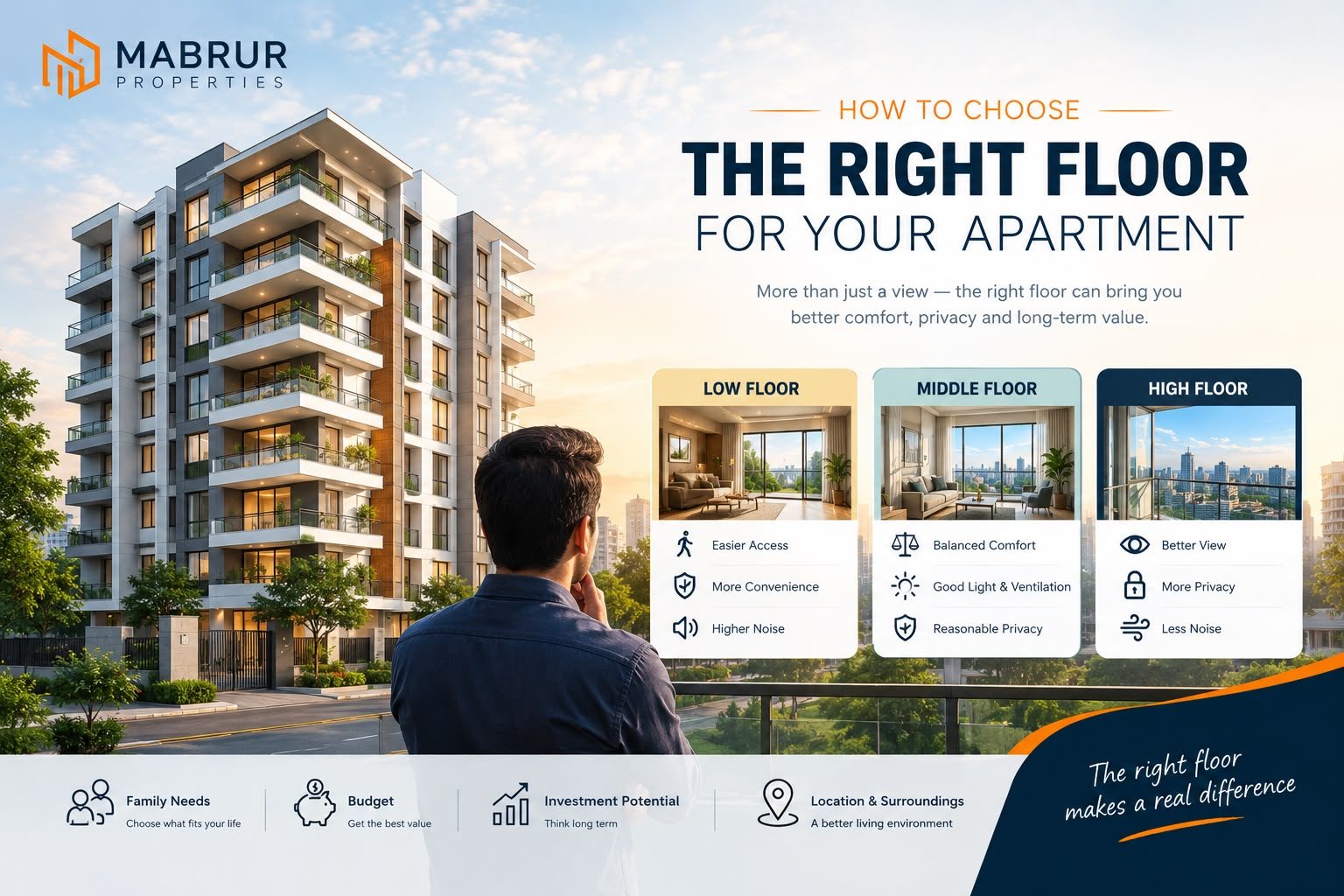
How to Choose the Right Floor for Your Apartment
Choosing an apartment is not only about location, size or price. The floor you choose can also affect your daily comfort, privacy, noise level, natural light and the property's future appeal.
Some buyers prefer lower floors because they are easier to access, while others prefer higher floors for better views and privacy. There is no single floor that is perfect for everyone. The right choice depends on your lifestyle, family needs and budget.
Low Floor Apartments
Lower floors can be convenient for families with elderly members or young children. They are easier to access, and using the stairs during a lift outage is less difficult.
Another advantage is accessibility. If you frequently need to move in and out of the building, a lower floor can save time. However, lower floors may experience more street noise and generally offer less privacy.
Before choosing a low floor, check the building's surroundings, road traffic, security and nearby buildings.
Middle Floor Apartments
For many buyers, middle floors offer a practical balance between accessibility, privacy and comfort.
They are usually far enough from street-level noise while still being reasonably accessible if you need to use the stairs. Depending on the building and surrounding area, middle-floor apartments can also receive good natural light and ventilation.
If you are looking for a home for long-term family living, a middle floor can be a sensible option.
High Floor Apartments
Higher floors are often preferred by buyers who value privacy, open views and reduced street-level noise. In a well-planned building, they can also provide good natural light and ventilation.
However, higher floors are not automatically better. You should consider lift reliability, emergency access, water supply and heat exposure before making a decision.
If the building is located near a busy road or densely developed area, a higher floor may provide a more comfortable living environment.
Which Floor Is Best for Families?
For a family, the best floor depends on who will be living in the apartment.
A family with elderly members may prefer a lower or middle floor because daily movement is easier. Families with children may value safety, accessibility and distance from busy roads. A young couple may place more importance on privacy, natural light and views.
Instead of choosing a floor simply because it is popular, think about how your family will actually use the apartment over the next five to ten years.
Which Floor Is Better for Investment?
For property investors, the decision should go beyond personal preference.
A floor with good natural light, ventilation, privacy and an attractive view may appeal to future tenants or buyers. However, the value difference between floors can vary depending on the building, location and local demand.
Before investing, compare the price difference between floors with the expected rental demand and resale potential. A higher floor is not necessarily a better investment if the additional price is too high compared with the actual benefit.
Things to Check Before Choosing a Floor
Before finalizing an apartment, visit the building and look at the surroundings from the actual floor whenever possible. Check the view, sunlight, ventilation and outside noise.
Also ask about lift capacity and backup systems, water supply, emergency arrangements, service charges and generator facilities. These details may seem small during the buying process but can have a noticeable impact on everyday living.
Most importantly, compare the actual apartment rather than choosing a floor based only on a brochure or floor plan.
Final Thoughts
So, how do you choose the right floor for your apartment?
There is no universal answer. A lower floor may be more convenient, a middle floor can offer a balanced living experience, and a higher floor may provide better privacy and views.
The best choice is the one that matches your family's needs, budget and long-term plans.
If you are exploring apartments in Dhaka, take time to compare different floors before making your final decision. A few extra minutes of inspection can help you choose a home that feels right not only on the day you buy it, but for years to come.

